Fast stabilization and containment
We prioritize stopping spread, protecting unaffected areas, and setting up drying so damage does not expand into adjacent rooms or floors.
Serving Atlanta, Georgia & surrounding areas
24/7 Emergency Response
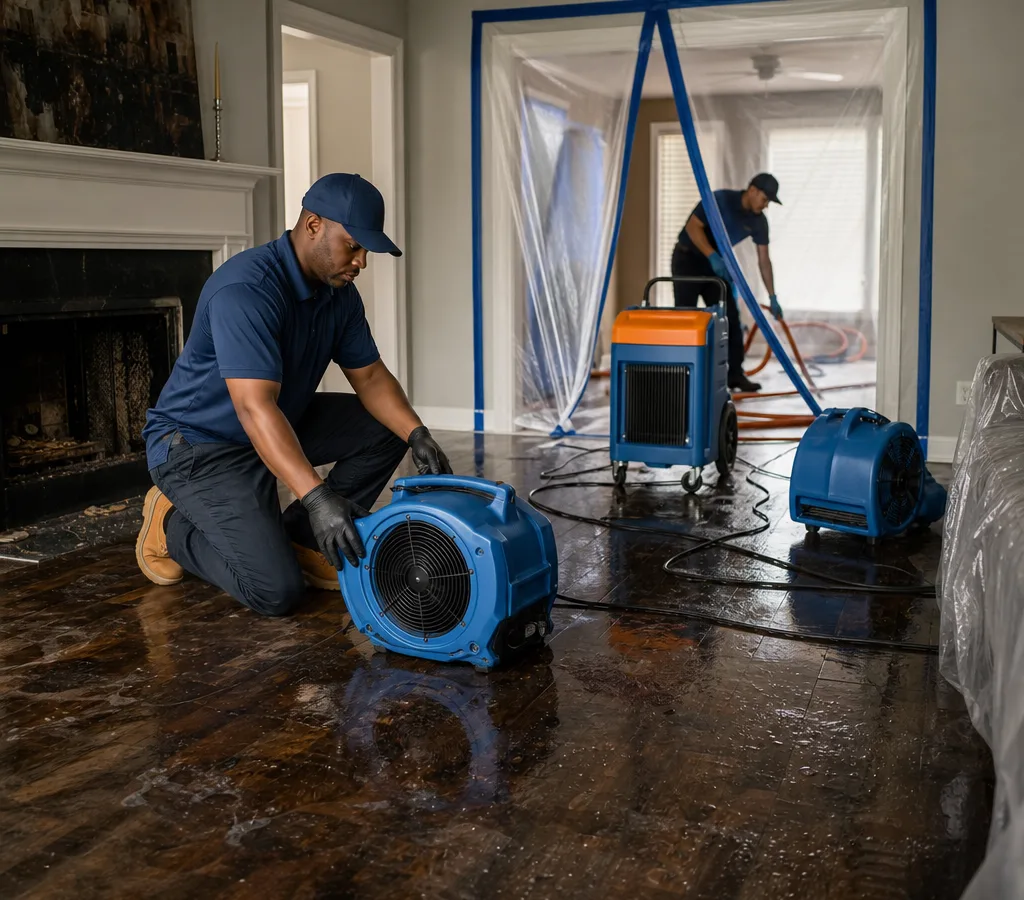
When water damage hits, minutes matter. Our certified technicians respond fast, document the loss, and dry your property with professional equipment so you can get back to normal with a clear plan and a written scope.
If you are searching for a water restoration company Atlanta property owners can rely on, you are usually dealing with one of two situations: active water that needs to be stopped and extracted, or hidden moisture that can keep damaging materials long after the visible water is gone.
Our team at Fire Damage Restoration Atlanta GA focuses on full-scope water restoration work for homes and commercial spaces in Atlanta, GA, including:
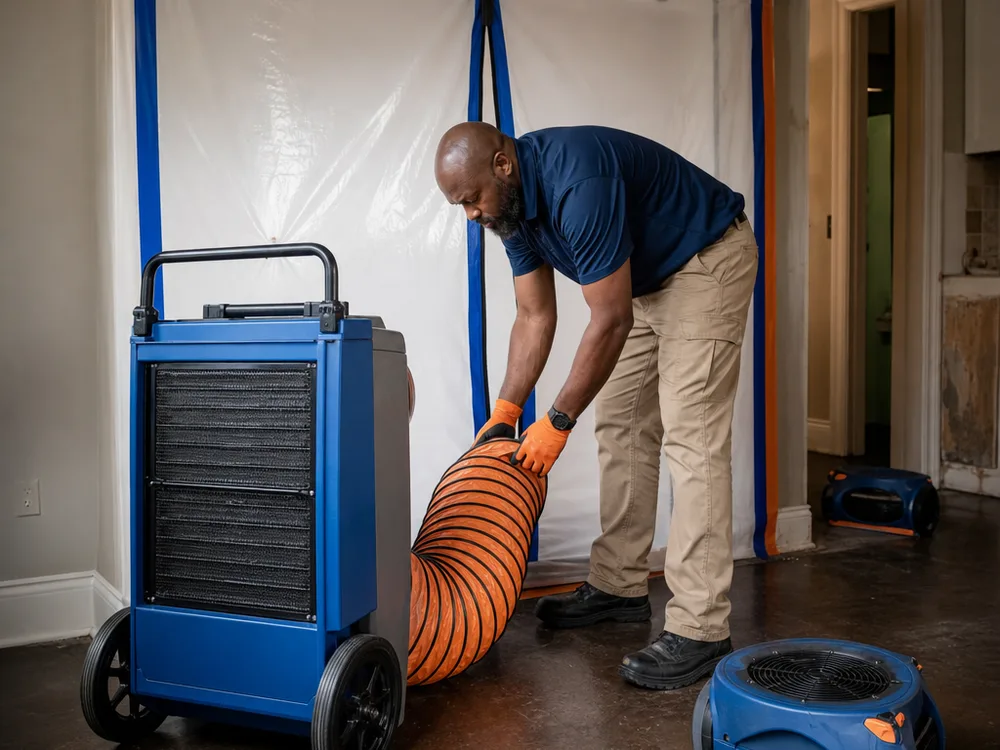
A proper restoration plan is built on measurements, not guesswork. We use moisture meters, hygrometers, commercial dehumidifiers, and air movers to target affected materials, then verify drying with repeat readings.
We prioritize stopping spread, protecting unaffected areas, and setting up drying so damage does not expand into adjacent rooms or floors.
You receive a documented plan of what is being dried, what needs removal, what will be monitored, and what the next decision points are.
Drying is done with professional dehumidification and airflow, supported by moisture mapping and monitoring notes.
We provide the photos, readings, and drying logs that carriers often request, and we explain what is happening at each stage.
When a home or business is still in use, we plan work hours, noise, and containment to keep disruption manageable.
In Atlanta, water losses often spread beyond the obvious wet spot. Water can travel through wall cavities, under floating floors, and down to lower levels, especially in townhomes, condos, and older homes with multiple remodel layers.
We commonly see supply line breaks and appliance leaks that soak cabinets and subfloors, HVAC condensate problems that wet ceilings or walls, overflow events that reach behind trim, and basement or crawl-space moisture that keeps humidity high.
The first critical step is moisture mapping: checking the affected area, then extending the inspection until the wet boundary is found. That boundary drives the equipment count, containment plan, and whether materials must be removed to access trapped water.
If smoke or fire damage is present at the same property, an overall plan helps ensure trades are sequenced correctly and completed work does not need to be repeated.
Request Emergency Service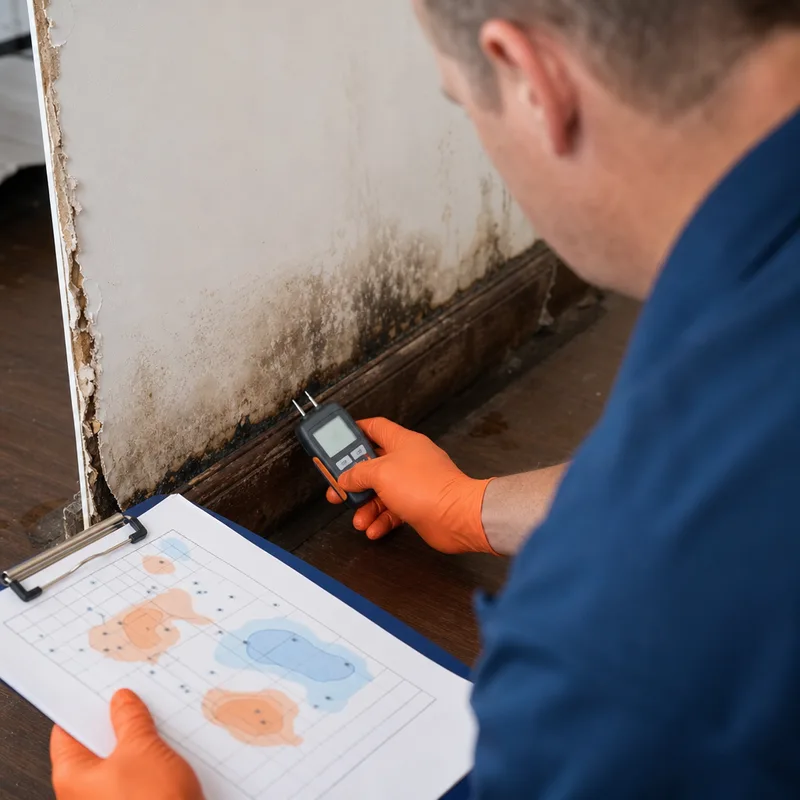
We identify the source and category of water, check electrical, slip, and ceiling hazards, and determine what can be dried in place.
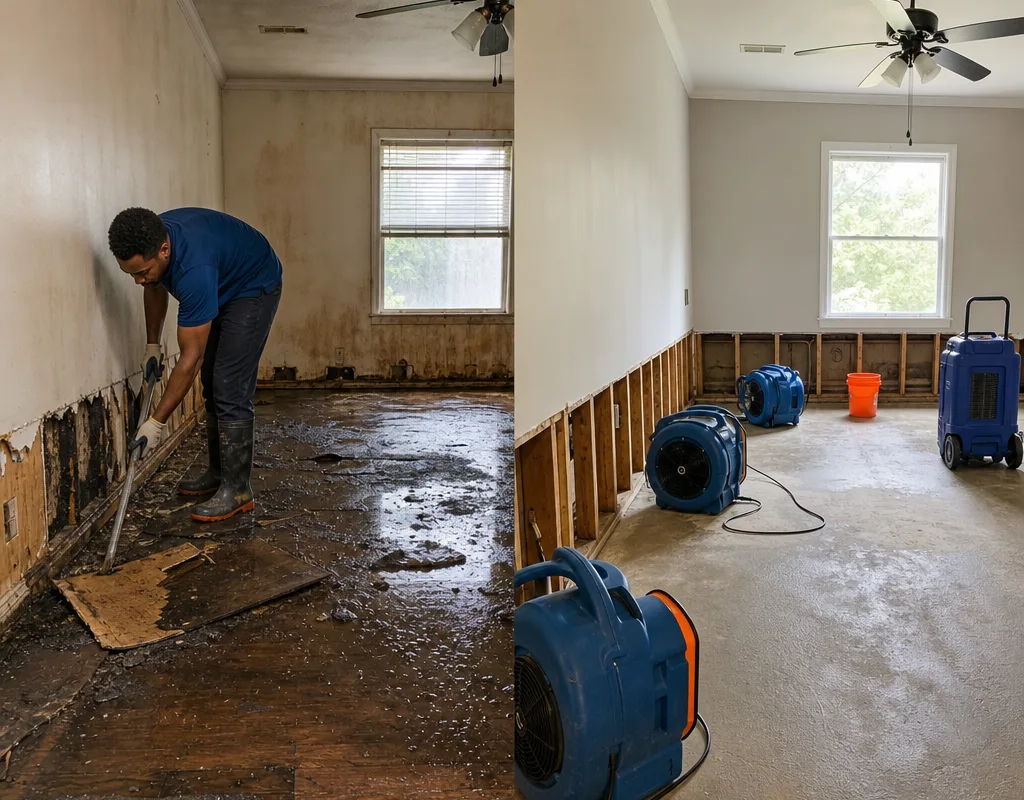
Standing water is removed with pumps or extractors before wet debris is cleared and the area is prepared for airflow.
We take baseline readings, mark affected materials, and plan equipment placement around material type and room layout.
We establish airflow and dehumidification, adding containment where needed to keep drying focused and efficient.
We re-check moisture and humidity, document progress, and reposition equipment as conditions change.
Once materials reach a dry condition, we document final readings and outline the repairs or rebuild steps that follow.
Water restoration in Atlanta typically ranges from about $900 to $6,500+, depending on how far water traveled and how much material can be dried in place. A small, clean-water loss in one room is usually on the lower end, while multi-room saturation, wet subfloors, or contaminated water pushes costs higher.
Final pricing depends on the category of water, square footage affected, ceiling and wall involvement, equipment days, access limits, and whether controlled removal is required to reach trapped moisture. The exact cost is confirmed after an on-site inspection and moisture mapping.
“They explained what was wet, showed the moisture readings, and updated the plan when the leak had spread farther than we thought. The documentation made the insurance conversations much easier.”
“The crew arrived fast, pulled the water out, and had fans and dehumidifiers set up the same day. They kept the work area contained so we could still use the rest of the house.”
You should start mitigation as soon as possible, ideally the same day, because water can wick into drywall, insulation, and subfloors quickly. Even when the surface looks dry, hidden moisture can remain in cavities and under flooring, which is why professional extraction and moisture mapping matter early.
Water mitigation is the immediate work to stop further damage—extraction, drying setup, containment, and monitoring—while water restoration is the broader process that includes returning the property to a pre-loss condition after drying is verified.
Some drywall can be dried if it is not structurally compromised and responds to controlled drying, but saturated insulation often needs removal because it can hold water and block airflow. Moisture readings, water type, and access determine the approach.
Many residential drying projects take about 3 to 5 days, but the timeline changes with the amount of water, material types, and whether moisture is trapped behind cabinets, under flooring, or across multiple levels.
Yes. We document conditions and progress with photos, moisture readings, and drying logs that can support a claim file. We also explain the scope in plain language so you understand what is being billed and why.
If it is safe, stop the water source, avoid using electrical outlets in wet areas, and move small valuables away from the affected zone. Keep the area accessible and avoid running household fans directly at soaked materials if you do not know how far the water traveled.
Yes. Water losses in condos and multi-unit properties often require extra documentation and coordination because water can migrate into shared walls and units below. We locate the wet boundary, set containment where needed, and provide clear notes about affected areas.
Tell us what happened and what areas are wet. We will assess the affected materials, map the moisture, and provide a written scope for drying and cleanup so you can make the next decisions with confidence.